DEI イメージング


Inquiry number
SOL-0000001445
Beamline
BL20B2 (Medical and Imaging I)
Scientific keywords
| A. Sample category | biology, medicine, research on method, instrumentation |
|---|---|
| B. Sample category (detail) | organic material, macromolecule, biology (in vivo), biology (in vitro), organism, cell, biological material, biomolecule, crystal, biomolecule, noncrystal |
| C. Technique | X-ray diffraction, absorption and its secondary process |
| D. Technique (detail) | reflection, refraction |
| E. Particular condition | 2D imaging, interface, room temperature |
| F. Photon energy | X-ray (4-40 keV), X-ray (> 40 keV) |
| G. Target information | morphology |
Industrial keywords
| level 1---Application area | Pharmaceuticals |
|---|---|
| level 2---Target | process analytical technology (PAT) |
| level 3---Target (detail) | drug |
| level 4---Obtainable information | density, crack, crevice, molphology |
| level 5---Technique | imaging |
Classification
A80.50 Pharmaceuticals
Body text
DEI (Diffraction Enhanced Imaging)は,屈折率の違いに基づいて物体のX線画像を造るユニークな方法です。分解能0.2ミリから20ミクロン程度までの観察に向いています。下の画像はアクリルの円柱の画像で,他の方法では得られないコントラストが得られています。
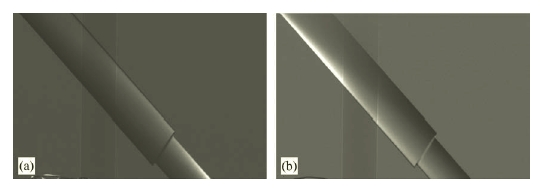
[ K. M. Pavlov, T. E. Gureyev, D. Paganin, Y. I. Nesterets, M. J. kitchen, K. K. W. Siu, J. E. Gillam, K. Uesugi, N. Yagi, M. J. Morgan and R. A. Lewis, Nuclear Instruments and Methods in Physics Research A 548, 163-168 (2005), Fig. 2,
©2005 Elsevier Science Publisher ]
Source of the figure
Original paper/Journal article
Journal title
Nuclear Instruments and Methods in Physics Research A 548 (2005) 163–168
Figure No.
2
Technique
Source of the figure
No figure
Required time for experimental setup
1 shift(s)
Instruments
References
| Document name |
|---|
| Nuclear Instruments and Methods in Physics Research A 548 (2005) 163–168 |
Related experimental techniques
Questionnaire
The measurement was possible only in SPring-8. Impossible or very difficult in other facilities.
This solution is an application of a main instrument of the beamline.
Ease of measurement
Easy
Ease of analysis
Easy
How many shifts were needed for taking whole data in the figure?
Less than one shift